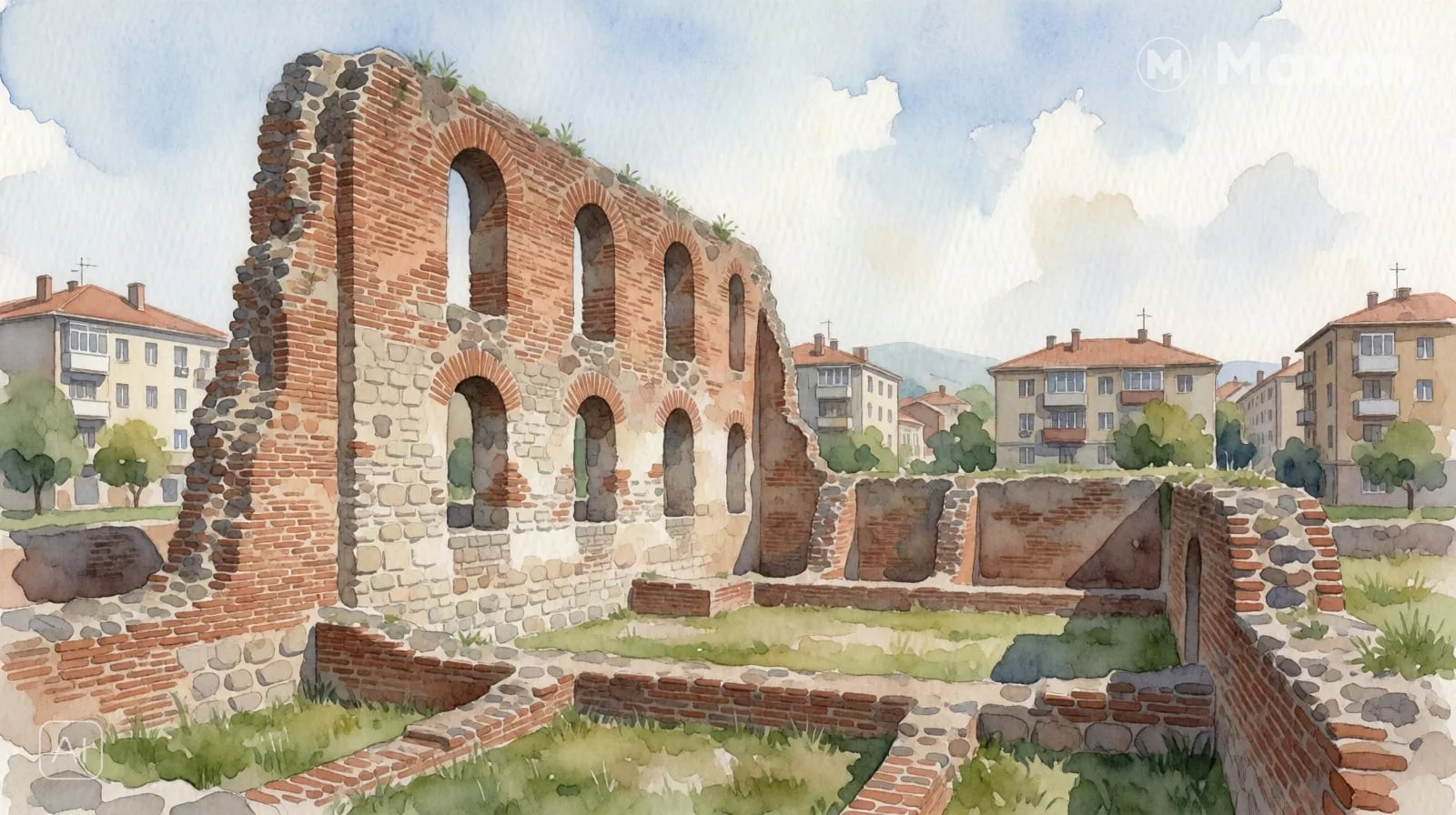
In the center of Varna, tucked between residential buildings and modern streets, stand the remains of a public bathhouse where, nearly two millennia ago, locals spent hours conversing, meeting friends, and relaxing. A few hundred kilometers away, beneath Sofia's bustling Largo, the paved streets of ancient Serdica still run. And in Plovdiv, you can sip coffee just steps from a stadium that once drew thousands of spectators.
As it turns out, walking through the Roman Empire doesn't require leaving Bulgaria at all.
Most intriguing of all, the Romans left behind far more than fortresses, columns, and statues. Beneath today's cities lie traces of a surprisingly familiar way of life—complete with public baths, heated rooms, vibrant market streets, and beautiful private homes whose owners clearly valued comfort just as much as we do.
Varna: When the Public Bath Was the Center of Urban Life
Step into a modern spa today, and you won't be surprised to find alternating hot and cold pools, relaxation lounges, and social areas. Nearly 1,800 years ago, the residents of Odessos—as ancient Varna was known—enjoyed a remarkably similar luxury, only on a far grander scale.
The Roman Thermae of Odessos were built toward the end of the 2nd century and covered an area of more than 7,000 square meters. They are the largest known Roman bath complex on the Balkan Peninsula, and some of the surviving walls still reach an impressive height today.
Imagine what went on inside. Visitors moved through halls of varying temperatures—the frigidarium with cold water, the tepidarium with moderate warmth, and the caldarium with hot water. Heated air circulated beneath the floors and through the walls via an ingenious system called a hypocaust. In this way, the Romans heated massive spaces centuries before modern central heating existed.
Yet the baths were never merely about hygiene. They were the heartbeat of social life—places where people talked politics, exercised, met acquaintances, and caught up on the latest news. It was essentially an ancient social club, elevated by marble columns and radiant underfloor heating.
Today, the ruins of the thermae sit in the historic quarter of Varna, near San Stefano and Khan Krum streets. A walk among their towering brick walls offers a vivid sense of the ancient city's scale. Linger among the preserved chambers, and you will easily understand why the Romans invested so much in their daily comfort.
Devnya: A Home Where the Floors Tell Stories
Not far from Varna, in modern-day Devnya, once stood Marcianople—one of the key cities in the Roman provinces of these lands. Here, history has survived not only in fortress walls and stone inscriptions, but in something far more intimate: the decoration of a wealthy urban residence.
The Museum of Mosaics displays floor artworks from a large late-Roman townhouse built in the late 3rd and early 4th centuries. The home featured an inner courtyard encircled by a colonnade, a well, and numerous living quarters. Portions of the floors were covered with intricately laid colorful pebbles forming mythological scenes, animals, birds, and geometric patterns.
One of the most captivating mosaics illustrates the tale of Zeus and Antiope. According to ancient myth, the supreme god transformed into a satyr to approach the beautiful Antiope. The home's occupants were clearly not satisfied with ordinary decoration—they wanted their floors to tell compelling stories.
The mosaics were crafted from small tesserae of marble, limestone, terracotta, and colored glass. Sixteen distinct colors were used, and several of the panels can still be admired in the exact spots for which they were originally created.
It is fascinating to imagine how daily life in this villa differed from that of ordinary residents in Marcianople. Even so, the yearning for a beautiful interior, a spacious courtyard, and a welcoming family home feels remarkably contemporary.
Deultum: The Roman City Born Near Burgas
Head south along the Black Sea coast, and another intriguing chapter unfolds. Near the present-day village of Debelt, west of Burgas, lie the remains of Deultum—a Roman colony founded in the 1st century.
This was no modest frontier outpost. Deultum enjoyed the status of a Roman colony and steadily developed into an important urban center. Among the excavated ruins, archaeologists have uncovered streets, drainage systems, public baths, and civic structures that reveal how daily life was organized.
What makes Deultum especially noteworthy is its position along vital roads and trade corridors. For the Romans, roads were far more than military conduits. Merchants, artisans, news, and ideas all traveled along them. In this way, even cities that now seem far removed from major metropolises were once woven into a vast network spanning the Mediterranean and much of Europe.
Today, the Deultum–Debelt Archaeological Reserve offers a peaceful window into this past, well away from the bustle of the city. It is a rewarding stop for history enthusiasts and anyone looking to discover Burgas and its surrounding region beyond its well-known seaside attractions.
Aquae Calidae: Hot Springs That Drew People Since Antiquity
Just 15 kilometers from the center of Burgas lies a sanctuary where people sought rejuvenation in warm mineral waters long before modern wellness retreats existed.
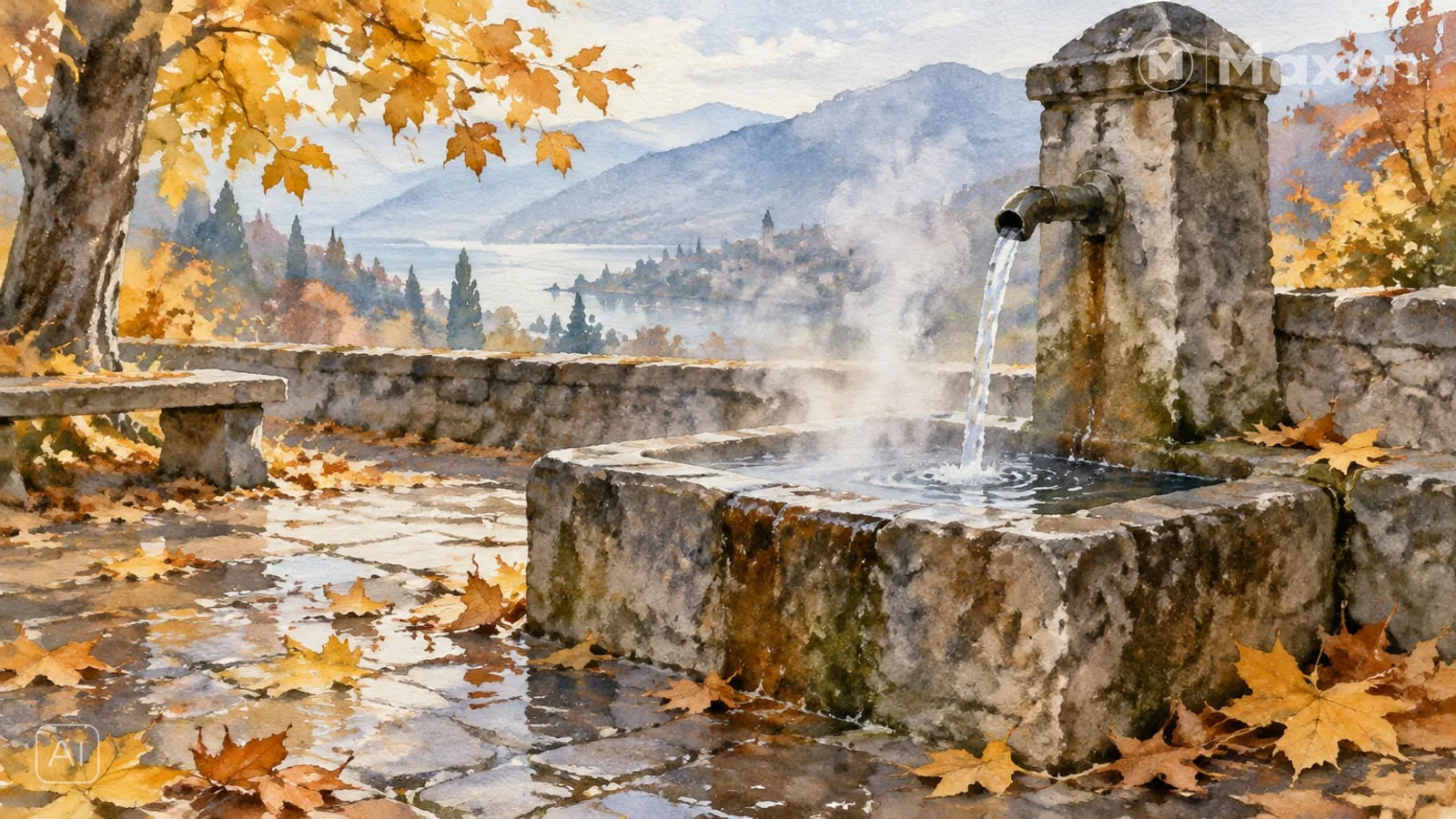
Aquae Calidae, meaning "hot waters," grew around thermal springs familiar even to the Thracians. The site originally housed a sanctuary dedicated to three nymphs who, according to ancient belief, guarded the water's healing powers.
The Romans transformed the site into an impressive bath complex with pools, heated halls, and spaces for rest. Yet the story of Aquae Calidae did not end with the fall of Rome. Over the ensuing centuries, the springs continued to attract visitors, and during the Ottoman period, a bathhouse linked to Sultan Suleiman the Magnificent was erected here.
Today, the archaeological complex lets you trace the different eras that left their mark on this single spot. Between the ruins of the ancient thermae and the restored Ottoman bathhouse, history feels unusually immediate.
And while the Roman baths in Varna showcase how essential public bathing was to civic life, Aquae Calidae tells a different story: how a natural thermal spring can draw people together for over two thousand years.
Sofia: Ancient Serdica Beneath the Modern Capital
Perhaps the most extraordinary thing about Sofia is that you don't even have to leave downtown to find yourself in the middle of a Roman city. Simply step down beneath Independence Square, where the Ancient Serdica Archaeological Complex reveals original streets, buildings, and engineering works from antiquity.
Here, directly below modern boulevards and public plazas, lie preserved sections of the ancient street grid, water supply lines, and sewer channels. Roman Serdica was a pivotal crossroads city through which major routes linked various corners of the empire.
Even more striking, just a short walk away stands the Rotunda of St. George—a 4th-century brick structure that has outlasted every transformation of the city around it. Modern government buildings now tower over it, while the rotunda itself feels like a portal to an entirely different age.
Our Sofia city guide explores these historic layers in greater depth, detailing how this ancient city remains effortlessly woven into the everyday rhythm of Bulgaria's capital.
Plovdiv: A Stadium Under the Street and a Theater Under the Stars
Plovdiv has its own seamless way of blending past and present. As you stroll along the pedestrian Main Street, you might never suspect that part of your walk takes you directly over an ancient stadium.
The Roman Stadium of Philippopolis was constructed in the 2nd century and could hold thousands of spectators. Today, a restored section is visible near Dzhumaya Mosque, while the rest of its arched structure continues beneath modern buildings and pavements.
Continue up toward the Old Town, and you will arrive at the Ancient Theater—one of Plovdiv's most breathtaking landmarks. Built during the Roman era, it remains an active venue for open-air concerts, operas, and cultural festivals.
It is hard to imagine a better example of a city that refused to lock its history behind glass. Nearly two millennia ago, audiences gathered here for performances, and today, that very same stone auditorium continues to welcome the public under the stars.
For more stories from the city, read our feature on Plovdiv, the Old Town, and its cultural life.
Beyond the Major Cities: The Roman Story Continues
Bulgaria's Roman heritage extends far beyond Varna, Sofia, and Plovdiv. Some of the most rewarding discoveries await in places that rarely feature on standard tourist itineraries.
In Hisarya, for example, formidable sections of the defensive walls of ancient Diocletianopolis still stand tall. Renowned for its mineral springs, the town today blends Roman gates with leafy parks, fountains, and contemporary spa resorts.
Near Veliko Tarnovo, by the village of Nikyup, lie the ruins of Nicopolis ad Istrum—a city founded by Emperor Trajan following his victories over the Dacians. Public buildings, paved streets, and a central forum all point to a sophisticated, well-planned urban existence.
Along the banks of the Danube near Svishtov, the archaeological site of Novae reveals a very different facet of the Roman world: the life of the legionnaires. This military fortress was equipped with headquarters, a comprehensive military hospital, and baths. Even far on the northern frontier, Roman legions relied on advanced infrastructure to sustain their daily routines and military readiness.
These sites remind us that Roman history was not confined to imperial capitals and major ports. It shaped the fabric of dozens of towns and settlements linked by highways, commerce, and shared civic traditions.
Practical Tips for Following the Roman Trail
You don't need an elaborate grand tour across Bulgaria to experience this heritage. Many of the most captivating sites can easily be enjoyed on short excursions.
If you are based in Varna, the Roman Thermae and the Museum of Mosaics in Devnya make an easy pairing for a single day, provided you have a car and a few relaxed hours. In Sofia, the Serdica complex and the Rotunda of St. George are right in the heart of the city center. In Plovdiv, the stadium and the Ancient Theater fit naturally into an afternoon walking tour through the Old Town.
When planning a trip to Deultum, Nicopolis ad Istrum, or Novae, it is wise to verify opening hours, site accessibility, and guided tour availability in advance. Ongoing archaeological research, conservation projects, and seasonal weather can occasionally affect access to specific areas.
There is one more approach worth taking: instead of simply hunting for the most impressive photo, take a moment to picture these spaces filled with people. Where did they meet? How did they travel? How did they heat their homes? How did they spend their evenings?
Those are precisely the questions that transform weathered ruins into the living story of real human lives.
A Past That Remains Part of Daily Life
Bulgarian cities have an uncanny ability to gather multiple centuries in one frame. Next to Roman brickwork, you will find medieval churches, National Revival mansions, and contemporary apartment buildings. Streets change names and facades, yet they often preserve the footprint of the ancient city resting quietly below.
That is what makes an ordinary walk through Varna, Sofia, or Plovdiv so engaging. You can begin your morning with an espresso in a lively square and, minutes later, find yourself standing amid the ruins of a public bathhouse, an ancient theater, or a Roman colonnade.
If you are considering getting to know these cities as potential places to live, explore our property listings in Varna, Sofia, and Burgas. A city's true character is defined not only by its modern amenities, but by the rich history that shaped it.
The next time you take a walk, look down for just a moment. Only a few meters beneath your feet, there may well be a street where someone was hurrying to meet a friend nearly two thousand years ago.