When viewing a new home in Bulgaria, the first features that capture your attention are usually the view, the floor plan, or the abundance of natural light. Yet as autumn sets in, heating quickly becomes a top priority. The way a property is heated directly affects your monthly household budget, everyday living comfort, and long-term property maintenance.
Before signing a preliminary contract, it pays to look beyond cosmetic renovations and thoroughly inspect the heating setup.
Core Heating Systems: Pros and Key Considerations
Several primary heating methods are used across Bulgaria. Each has distinct maintenance requirements, upfront costs, and operational nuances.
District Heating (Toplofikatsiya / TEC)
Central district heating remains one of the most common solutions in major cities such as Sofia, Plovdiv, Varna, Burgas, Ruse, and Pleven.
- Advantages: It delivers steady, even warmth throughout the entire home without requiring you to store fuel or handle regular technical servicing. It also typically provides continuous domestic hot water.
- Key Considerations: Bills reflect not only your private consumption but also the shared building installation (common areas). The heating season starts and ends based on decisions made by the municipal utility provider, rather than your personal preference on any given day.
Inverter Air Conditioners and Heat Pumps
Air-conditioning systems are the most widespread solution along the Black Sea coast and in many modern urban developments without access to district heating or natural gas.
- Inverter Air Conditioners: They warm rooms quickly, allow precise room-by-room temperature control, and provide essential cooling in the summer. However, lower-tier models can lose efficiency at temperatures below minus ten degrees Celsius, and continuous airflow can dry out indoor air.
- Heat Pumps (Air-to-Water or Water-to-Water): A modern, high-tech option favored in new developments and standalone houses. They heat water that circulates through hydronic underfloor heating or fan coils. The system runs quietly, distributes warmth comfortably from the ground up, and boasts outstanding seasonal efficiency.
Natural Gas (Gas Boilers)
Gas connections are widely available across several cities and rapidly expanding suburban districts.
- Advantages: Offers rapid heating, convenient control via room thermostats, and continuous on-demand hot water.
- Key Considerations: Requires an individual gas boiler that occupies space (typically in the kitchen, utility room, or enclosed balcony). It demands an annual service inspection by a certified technician and strict adherence to flue and ventilation safety standards.
Pellets and Firewood
Solid fuel and biomass heating are traditional staples in mountainous areas, villages, and suburban houses.
- Advantages: Wood pellets provide high calorific value alongside automated hopper feeding, enabling programmable heating schedules.
- Key Considerations: Requires a dry, spacious storage area for bags of pellets or cords of wood. Regular hopper refilling, ash cleaning, and diligent chimney maintenance are essential.
Direct Electric Heating and Underfloor Heating
Electric panel heaters (convectors), oil-filled radiators, and electric underfloor heating are easy to install and require no complex pipework.
- Electric Convectors: Ideal for compact apartments or as supplementary heating, but prolonged heavy use across large floor plans can lead to substantial monthly utility bills.
- Underfloor Heating: Can be electric (heating cables or mats) or hydronic (water-based). It creates an exceptionally pleasant indoor climate by warming from the floor level upward while keeping walls free of radiators.
What to Inspect During a Property Viewing
When touring a property with the Maxon team, pay close attention to the physical components of the heating installation. They reveal a great deal about the home's condition and how previous owners maintained it.
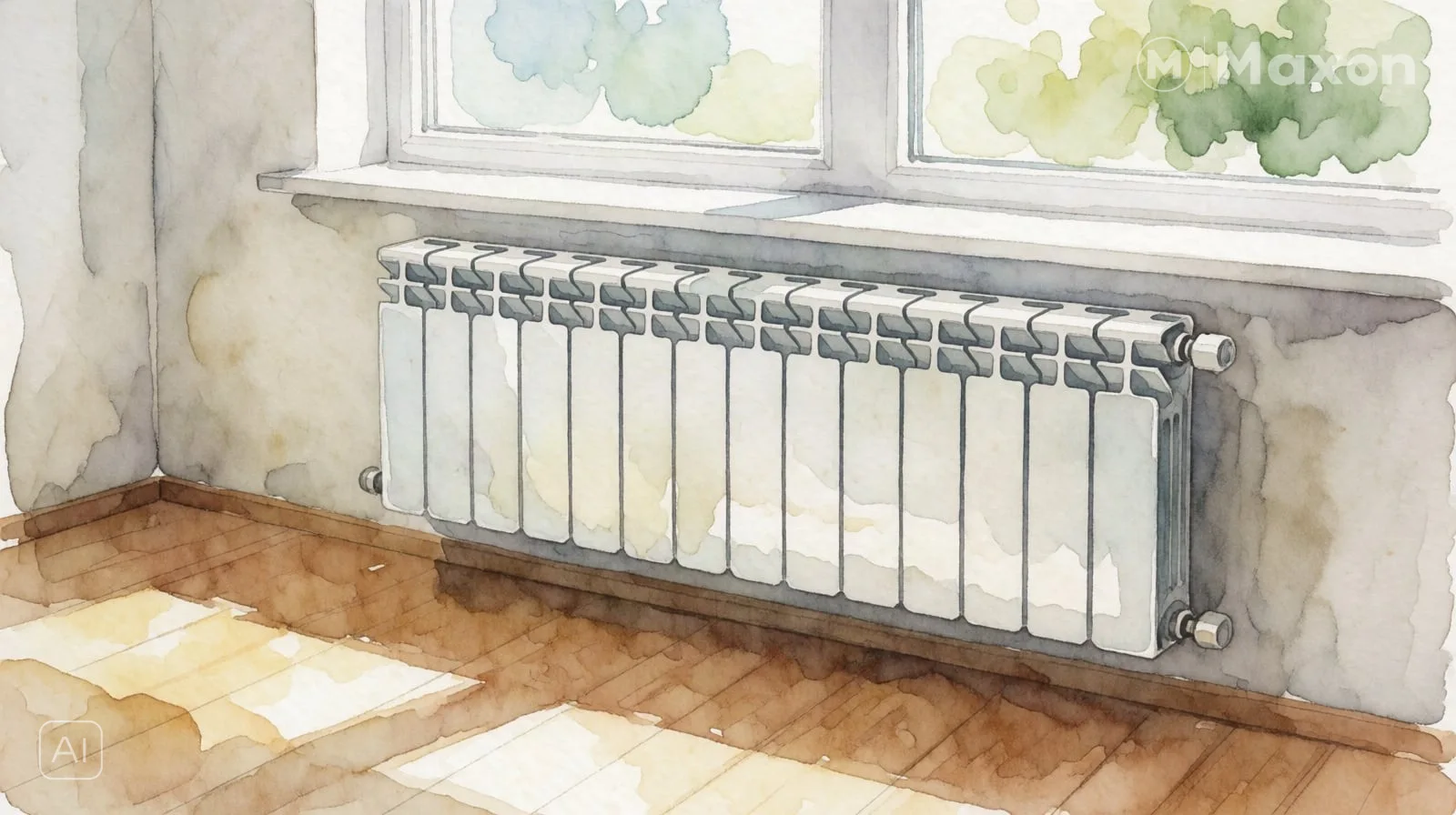
Radiators and Fittings
- Type and Material: Aluminum radiators offer rapid heat response and high thermal output. Older cast-iron radiators take longer to heat up but retain warmth long after the system shuts off. Steel panel radiators are a balanced choice, though more prone to internal corrosion if water quality is poor.
- Valves: Verify whether each radiator has a functional thermostatic valve. Turn it to ensure it operates smoothly rather than sticking due to limescale or rust.
- Signs of Leaks: Inspect the pipe connections, radiator joints, and the flooring directly underneath for rust stains or warped floorboards.
Heat Meters and Allocators
- In properties with district heating, check whether the radiators are fitted with individual heat cost allocators. Inquire whether readings are taken remotely or via annual in-person visits by utility staff.
- Ask to review the annual reconciliation bills (izravnitelni smetki) from the previous heating season. This reveals the actual running cost for that specific apartment, the proportion of common building charges, and whether neighbors are keeping their radiators switched off.
Boilers and Flues
- Gas and Pellet Boilers: Check the age of the unit and request service records showing regular annual maintenance. Inquire about the brand and the availability of certified service technicians nearby.
- Chimneys and Flues: If the property features a fireplace or pellet boiler, evaluate the chimney's condition. Check for proper draft, recent cleaning, access doors for inspection, and any signs of soot or moisture stains on adjoining walls.
Windows, Insulation, and Energy Performance
Even the finest heating system cannot perform efficiently if a home loses heat through its building envelope. A property's energy efficiency is central to winter comfort.
Thermal Insulation Layer
- Check whether the building has external thermal insulation, note the material used (EPS, mineral wool, XPS), and ask about its thickness. By modern standards, insulation under eight to ten centimeters often compromises performance.
- Take note of exposure. South- and southeast-facing apartments benefit from natural solar gain throughout the day, whereas north-facing rooms require significantly more energy to stay warm.
- Floor position also matters: middle-floor units bordered by heated apartments lose less heat than corner units, properties situated over unheated parking garages, or top-floor apartments directly beneath flat roofs.
Window and Joinery Quality
- Windows are the primary source of thermal bridging. Examine the profile (number of chambers) and the glazing unit.
- Double glazing with low-emissivity glass (such as Low-E or "four seasons" glass) or modern triple glazing dramatically cuts heat loss and eliminates cold drafts near windows.
- Inspect the rubber weatherstripping along the sashes: if it feels dry, cracked, or hardened, it should be replaced to stop cold drafts.
Energy Performance Certificate
Buildings commissioned in recent years come with an energy passport and an assigned energy rating (from A to G). Ratings of A and B guarantee low thermal losses and efficient energy use, whereas older, unrenovated buildings frequently fall into categories E or F.
Regional Differences: City, Mountain, and Coast
Bulgaria's climate varies considerably across regions, shaping the most practical heating choices:
- In Major Cities: Convenience, automation, and effortless operation take precedence. District heating and natural gas provide hands-off comfort tailored to busy urban lifestyles.
- In Mountain Regions: Winters are long, cold, and snowy. Heat pump systems must be correctly sized to run efficiently in freezing conditions, while pellet stoves, hydronic underfloor heating, and dedicated local boilers remain dependable options.
- Along the Black Sea Coast: Winters rarely bring sustained sub-zero temperatures, but persistent sea winds and high humidity make the air feel colder. High-performance inverter air conditioners are the top choice here, running at optimal efficiency through most of the winter while providing indispensable summer cooling.
Preparing Your Home for the Winter Season
If you purchase a property in autumn or are settling into a new home before winter, take these practical steps before cold weather arrives:
- Bleed the Radiators: If a radiator feels cold at the top and warm at the bottom, trapped air is the culprit. Using a radiator key or screwdriver, loosen the bleed valve until a steady stream of water emerges without hissing.
- Service Air Conditioners: Clean or wash the dust filters on indoor units. If necessary, hire a technician to check refrigerant pressure and sanitize the heat exchanger coil.
- Adjust Window Hardware: Most modern window fittings feature seasonal adjustments. By fine-tuning the eccentric locking cams on the frame, you can increase sash compression for a tighter seal against winter winds.
- Check System Pressure: If your home uses a gas boiler or heat pump, monitor the pressure gauge. Operating pressure on a cold system should typically read between 1.2 and 1.5 bar.
Evaluating the heating system thoroughly during your property viewings will protect you from unexpected surprises and repair expenses, allowing you to settle into your new home in Bulgaria with confidence.